Here's the thing nobody warns you about being good at your job.
The skill you're best at might be the one quietly wearing you down.
Not the meetings. Not the workload. Not the boss.
The skill itself.
The competence trap
For a long stretch of my career I was the guy you brought in when something needed fixing. Operations broken? I'd walk in, listen, find the leverage point, build a plan, ship it. People thanked me. Promotions followed. Companies kept asking for more of it.
If you'd asked me, I would have said this was my strength. I was good at it. I enjoyed parts of it. It paid well.
What I didn't see for a long time was that being known for it was costing me. Every time I solved one of those problems, the next bigger one landed on my desk. The reward for being good at the thing was being asked to do more of it. Faster. With higher stakes.
I called it ambition. I called it a season. I called it being paid well to do hard things. None of those were exactly wrong. But none of them captured the quiet truth underneath.
I was burning out doing the thing I was best at.
Why this is so hard to see
The reason most people miss this is that we conflate two different things. Competence and aspiration.
Competence is what you can do well right now. Aspiration is what you actually want more of.
They are not the same.
You probably have a few skills that look identical from the outside but feel completely different from the inside. The ones that energise you, and the ones that exhaust you. Two activities, both at expert level, both well paid. One leaves you sharper than when you started. The other leaves you needing a weekend to recover.
From a CV they're indistinguishable. From the inside, they're worlds apart.
The trap is that the world rewards both. So if you're not paying attention, your career will quietly optimise for the wrong one.
Daria's story
I sat down with Daria Farella for 50 Lunches episode 14. She had spent years becoming exceptionally good at her craft. Mastery-level good.
And then she crashed.
The crash didn't come because she wasn't good enough. It came because she was too good. Mastery had become a cage. Every new opportunity reinforced the same identity. The phone kept ringing for the same kind of work. She kept saying yes because it was the work she could do, not the work she wanted.
Burnout, in her telling, wasn't a workload problem. It was an identity problem.
The skill that had built her career was now the thing keeping her from the next chapter of it.
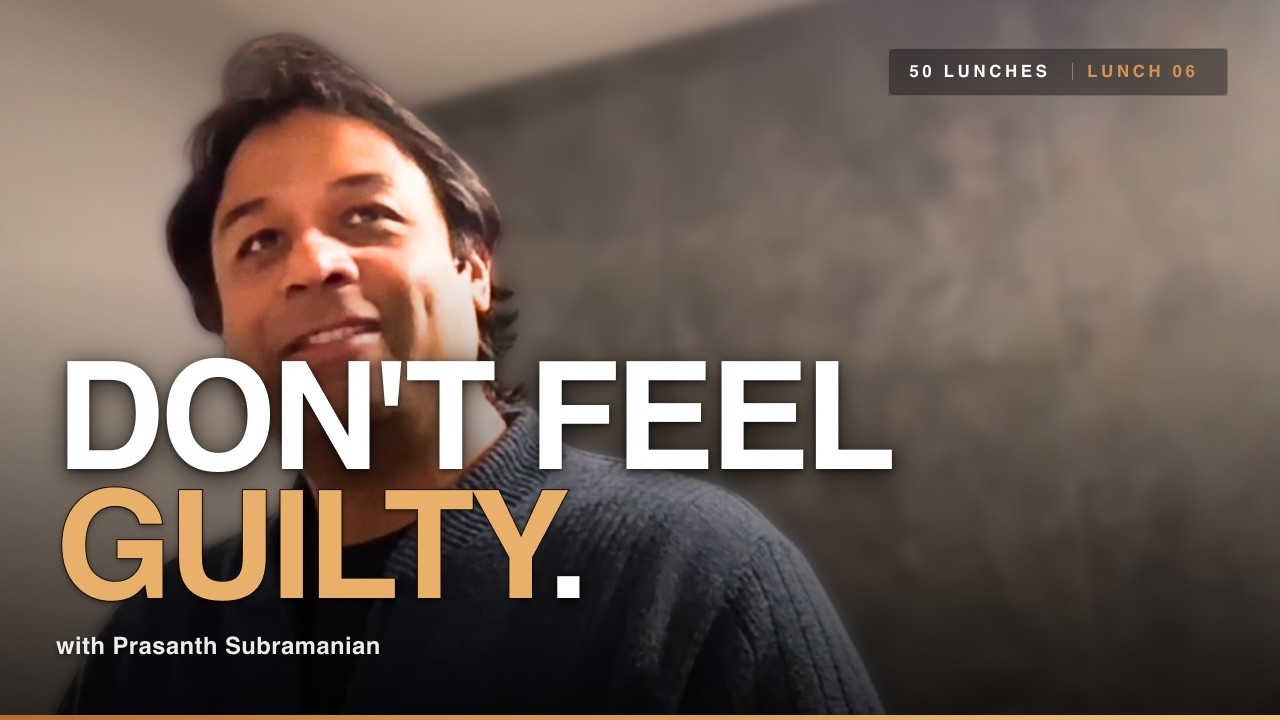
Prasanth and the costume that stayed on
Prasanth was a CTO. The kind of role you don't accidentally fall into. You earn it over a decade by being relentlessly good.
When the role ended, the strangest thing happened. He didn't just lose a job. He lost a sentence about himself.
Without "CTO" sitting at the front of the sentence, he had to rebuild his self-description from scratch. And the version of him that emerged wasn't a smaller CTO. It was a different person entirely... someone curious about ethics, AI, and what good leadership actually looks like.
The CTO skillset was real. But it wasn't who he was. It was a costume that had stayed on so long he'd forgotten it could come off.
Two questions that surface this fast
If any of this is hitting close, two questions tend to surface it quickly.
1. What are you most often praised for?
Sit with the answer. The thing you're praised for has shaped your career. Now ask yourself, do you actually want more of it? Or have you accepted it because it's the easiest thing to say yes to?
2. After doing it, do you feel sharper or duller?
Energy is the most underused signal we have. The work that energises you and the work that drains you can both pay well. They both look the same on a calendar. But your nervous system has been keeping a quiet ledger. Pay attention to it.
If your top skill leaves you needing recovery time week after week, that is not "the cost of being good." That is a signal.
What to actually do about it
You don't need to quit on Monday.
You do need to stop using "but I'm so good at it" as the trump card that ends every conversation about whether you should still be doing it.
Try this for a week. Pay attention to what kind of work leaves you charged versus what leaves you flat. Don't analyse. Just notice.
At the end of the week, ask one harder question. If I imagine doing this for the next ten years, do I feel pulled toward it or pushed?
If the honest answer is push, the next move isn't a leap. It's a slow rebalancing. Less of the draining work. More of the energising work. Even if the energising work pays less right now. Especially if it pays less right now.
That's how careers get rebuilt without burning everything down. One quiet recalibration at a time.
The harder truth underneath
Here's the part I had to learn the hard way.
The thing you're best at can be a gift. It can also be a debt.
If you're the one always called in to fix it, run it, lead it, save it, you've built a reputation. That reputation is real value. It is also a tax. Every reinvention will start with the same conversation. "But you're so good at the other thing, why would you walk away from that?"
You walk away from it because you've outgrown the costume. Because what got you here is, by definition, not what's going to take you somewhere new.
Your best skill earned you the platform. It doesn't have to choose what you build on it.
Where to take this next
If you want to look at the full picture, not just the work part, the Life Report is a good place to start. It surfaces where your energy is actually going.
If you want more on this exact pattern, Feeling Stuck in Your Career Doesn't Mean You're Broken covers the emotional side, and Career Reinvention After 40 covers the practical math.
And if you want to think it through with someone who has been here, that's what coaching is for.