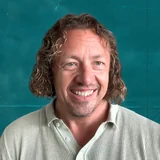
I'm standing inside Angkor Wat. One of the most extraordinary places I've ever been.
And it's teaching me something I didn't expect about purpose.
Not through the temples themselves, although they are stunning. Through the question everyone keeps asking and almost no one can answer.
"What am I supposed to be doing with my life?"
The problem with searching
Most of us approach purpose like a treasure hunt.
We look for it in new jobs. New goals. New cities. New identities. We try on different versions of ourselves and see what fits.
And yet the people who've done the most searching are often the most lost. That's not a coincidence.
Because purpose, in my experience, isn't something you find. It's something you remember. Something that's already there, expressed quietly through the way you naturally move through the world.
What Dharma actually means
I've been exploring a concept from ancient Indian philosophy: Dharma.
Forget the spiritual framing for a second. In practical terms, Dharma is simply this: the role you were built to play. What you're naturally good at. What comes easily to you. The patterns that show up again and again regardless of what job title you're carrying.
It's not about passion. Passion comes and goes. Dharma is structural. It's the operating system underneath your choices.
When you're living your Dharma, things feel effortless. Not easy, but effortless. The effort doesn't feel like it's working against you.
The nine archetypes
There are nine Dharma archetypes. Before I list them, one important note: don't try to pick your favourite. Try to notice which one you already are.
- Nurturer. Heal, support, strengthen.
- Warrior. Protect what matters.
- Teacher. Clarify and elevate others.
- Researcher. Seek truth and depth.
- Artist. Awaken emotion through beauty.
- Entertainer. Inspire joy, expression, and connection.
- Visionary. See possibilities before anyone else.
- Entrepreneur. Build solutions and systems.
- Activist. Challenge systems and spark change.
One of these probably clicked as soon as you read it. Most of us have a primary and a secondary. When I went through this list, I knew immediately. Teacher and Visionary. It's not what I chose. It's what I noticed.
The exercise that makes it real
Answer these three questions honestly.
One: What did you love to do as a child, and what do you still gravitate towards?
Two: What activity makes you lose track of time?
Three: What do you naturally offer others, even when you're not getting paid for it?
Don't look for what sounds impressive. Look for what feels effortless. That's your Dharma.
The line that stuck with me
Sitting in Angkor Wat, I wrote something in my notebook.
You can't be anything you want. But you can be everything you are.
We spend so much energy trying to become something different. But the people who seem most alive, most at ease in their lives... they're not becoming something different. They're becoming more fully themselves.
That's the work. Not searching for purpose. Noticing what's already there.
If this resonates, the Ikigai framework covers similar territory from a different angle. And if you want to see where you currently stand across all areas of your life, the Life Report is a good place to start.