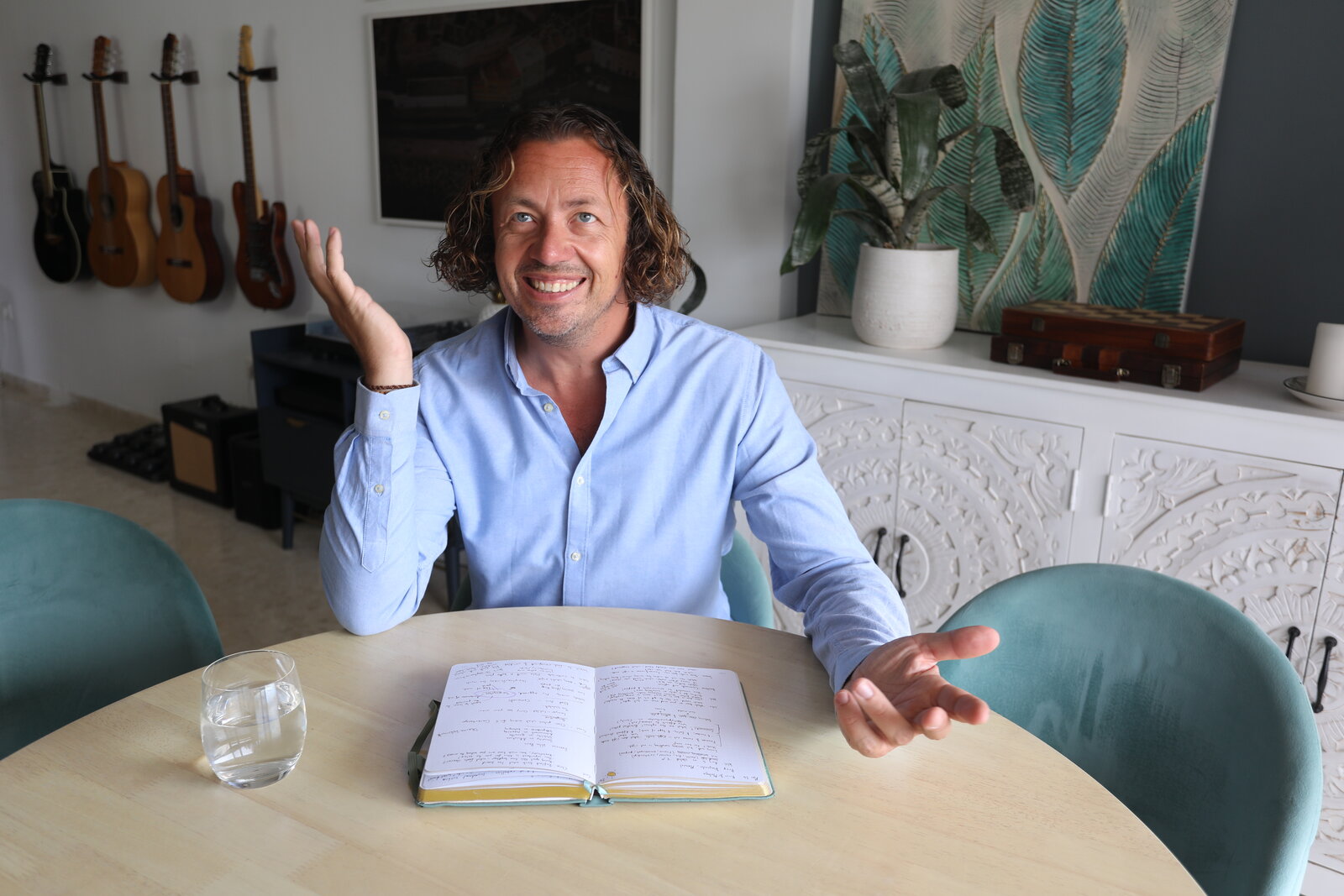
That's the phrase I use. I know how it sounds.
Sledgehammers are for demolition. Vulnerability is supposed to be soft, careful, something you reveal slowly once you're sure it's safe. The two words don't belong in the same sentence.
Except they do. Here's what I mean.
Most people get the sequence backwards
The standard model of trust goes like this: you meet someone, you stay polite, you perform a little, and over months or years you slowly let the guard down. Trust first, then openness. Vulnerability is treated as a risk to be rationed.
What I've noticed, in coaching and in life, is that the sequence works better the other way around. Openness first. The trust follows. Fast.
When you share the difficult thing, early and fully, you send a signal that can't be faked: I'm not performing here. And the moment one person stops performing, the other person's performance gets uncomfortable to maintain. The wall doesn't get chipped away over months of small talk. It comes down in one move.
That's the sledgehammer.
I've tested this on myself
This isn't theory for me.
When I was let go from a job, I wrote about it openly instead of dressing it up as "exploring new opportunities." It's never fun to be let go, and the timing is never quite right. But plain words are what make real conversations possible. Nobody can connect with a press release.
After I quit my corporate career, I traveled for months in a campervan. I came home feeling great about who I was on the inside... and I crashed. No structure, no purpose, some days I couldn't get out of bed. I had no idea what to do with a Tuesday afternoon. I tell that part of the story too, because the crash is the part people actually connect with. Nobody bonds with you over your highlight reel.
And on my own podcast, in a conversation with my old friend Pontus Holmgren, I admitted on camera that I struggle to know what I actually desire, and that I often feel uncomfortable in my own body. Strange thing to say into a microphone. But it took the conversation somewhere a normal interview never goes. Pontus met it with his own story about being a young man ruled by fear. The whole episode changed shape from that point.
One honest admission. Walls down. Every time.
Why it works
A few things are going on under the surface:
It breaks the performance loop. Most professional conversations are two people performing competence at each other. The first real admission ends the game, because there's no longer anyone to perform for.
It signals safety. You can't easily be judged by someone who just admitted their own mess. Going first removes the risk for the other person.
It invites reciprocity. Depth invites depth. Share something real and people almost can't help matching it. My podcast guest Melek Mourad teaches a version of this called the empathy game: one person shares something vulnerable, the other reflects it back in their exact words. Hearing your own difficulty in someone else's voice is strangely powerful.
It's rare. We live surrounded by curated surfaces. Genuine openness stands out, and it gets remembered.
The fine print
A sledgehammer is a tool, and tools can be misused. So let me be precise about what this is and what it isn't.
It's intentional. I share what's real because connection is the point, and I share it with people, not at them. It isn't dumping every raw feeling on a stranger, and it isn't humble-brag vulnerability ("my weakness is I care too much"). People smell that instantly. The thing you share has to be actually true and actually cost you something to say.
And it works best exactly where it feels most out of place: professional settings. The boardroom, the leadership offsite, the first coaching session. The places where everyone is performing hardest are the places where one honest sentence does the most demolition.
If you lead people, this is worth taking seriously. A leader who can say "I don't know" creates a team where people tell the truth. A leader who performs certainty creates a team that hides problems.
Where to start
You don't need to announce your darkest chapter on LinkedIn this afternoon. Start smaller.
In your next real conversation, when someone asks how things are going, skip the default "busy, but good." Say one true thing instead. What's actually hard right now. Then watch what happens to the conversation.
The walls you've been slowly chipping away at for years? Some of them will come down in one swing.
What's the true thing you've been holding back? :)